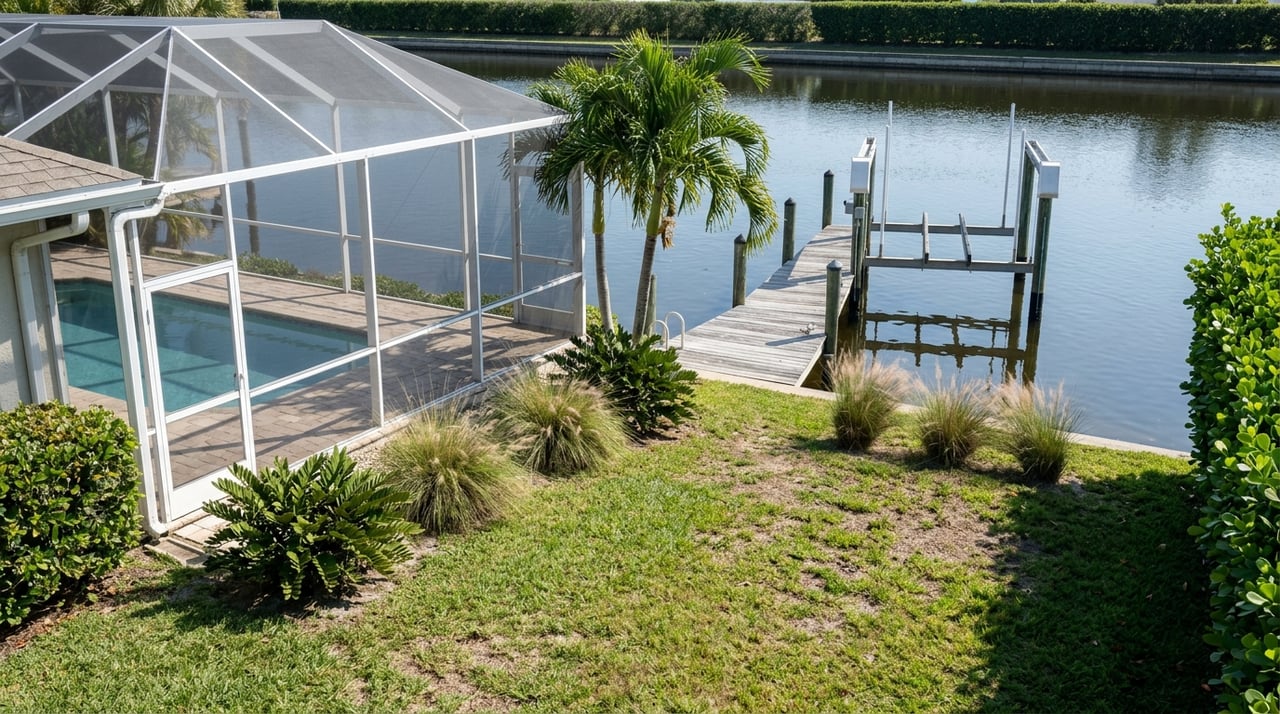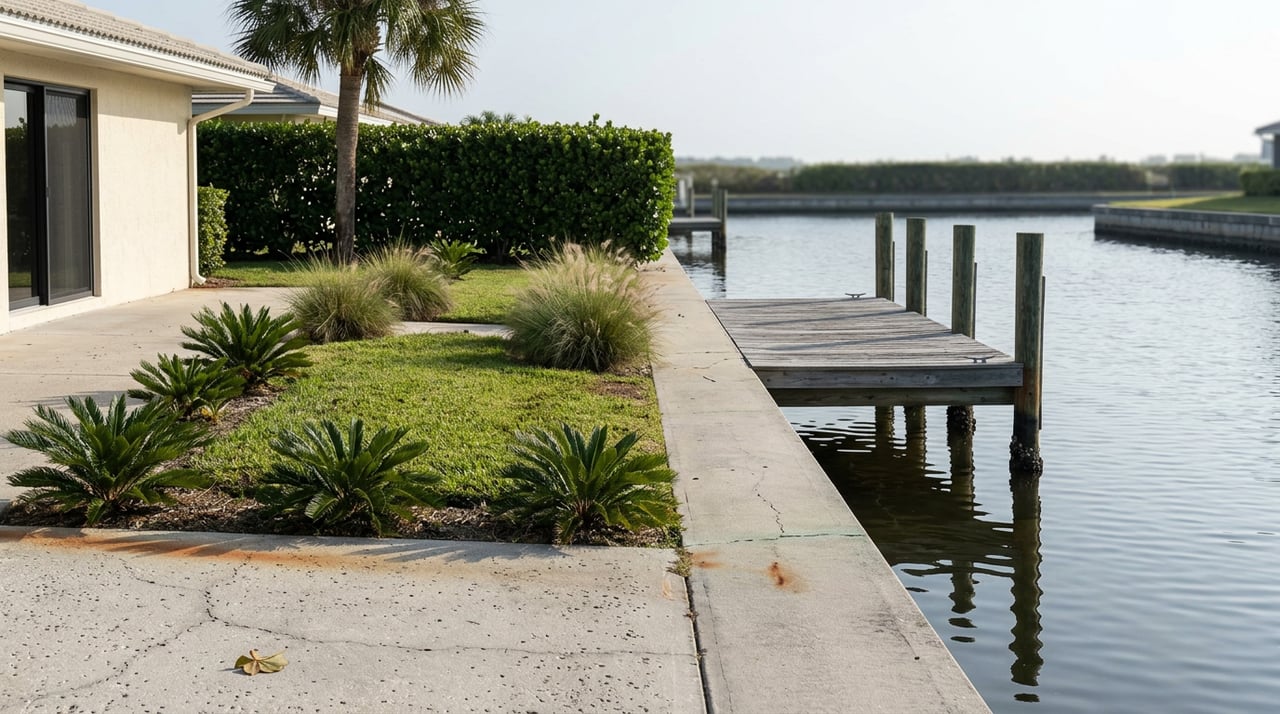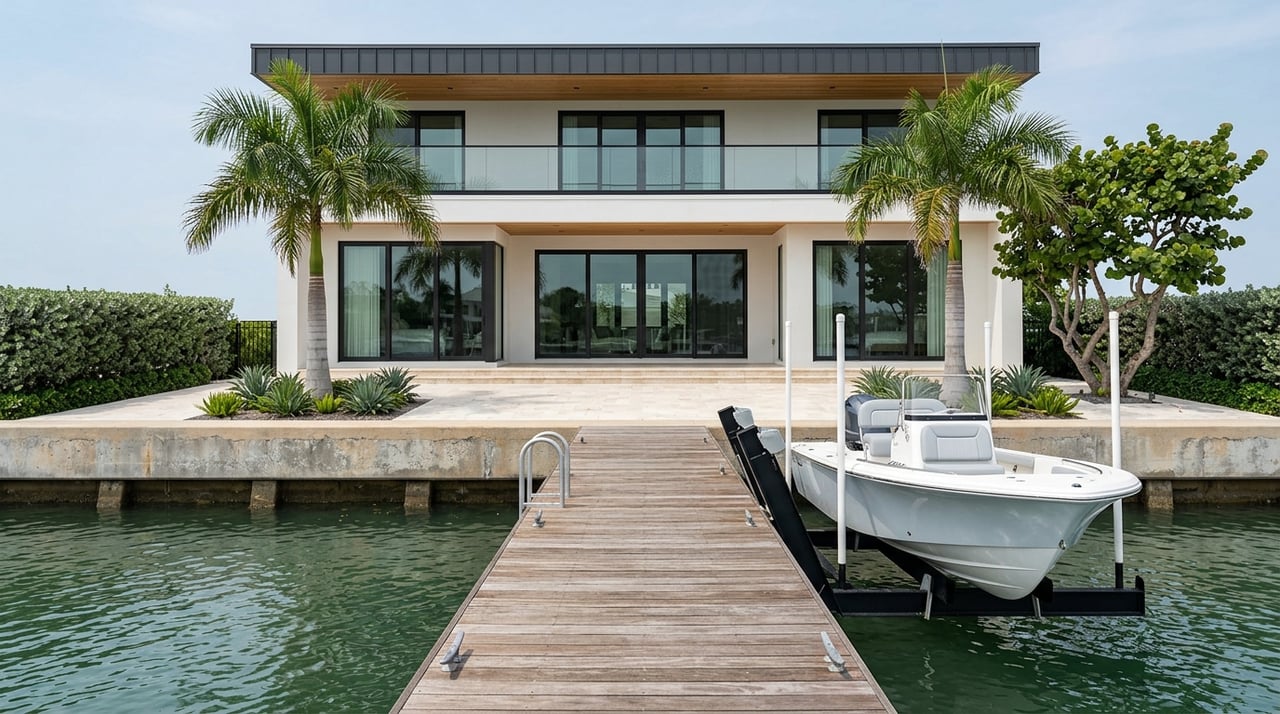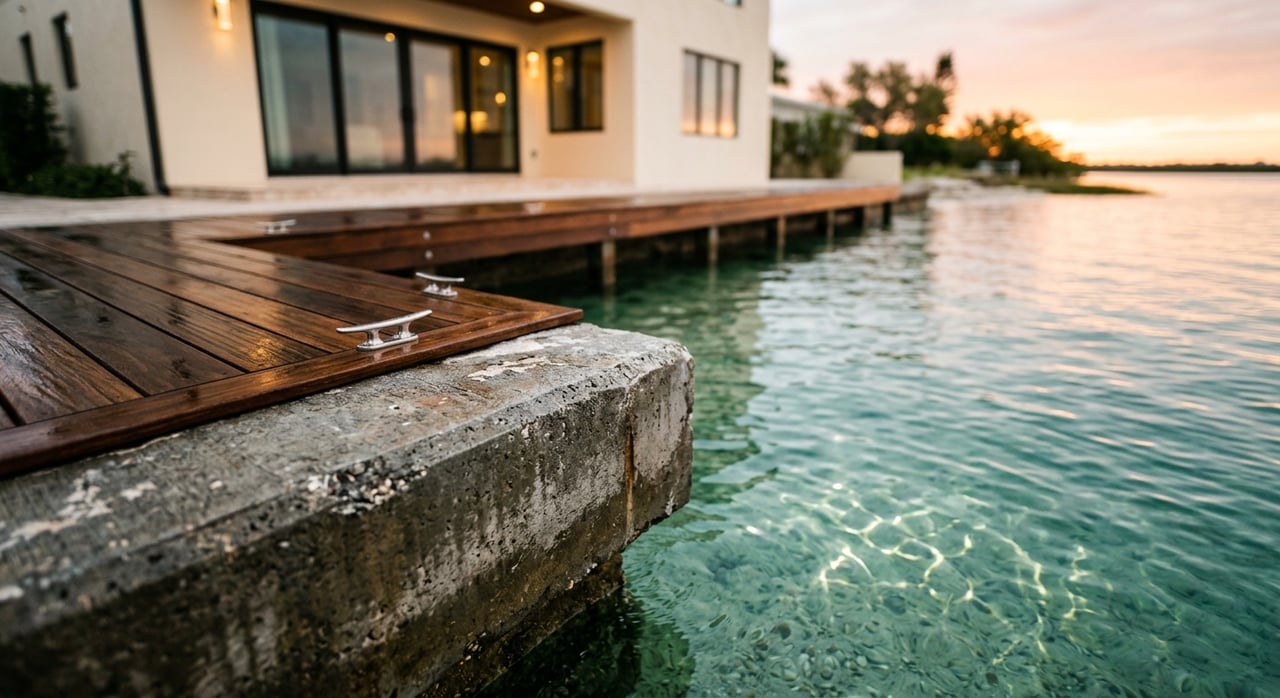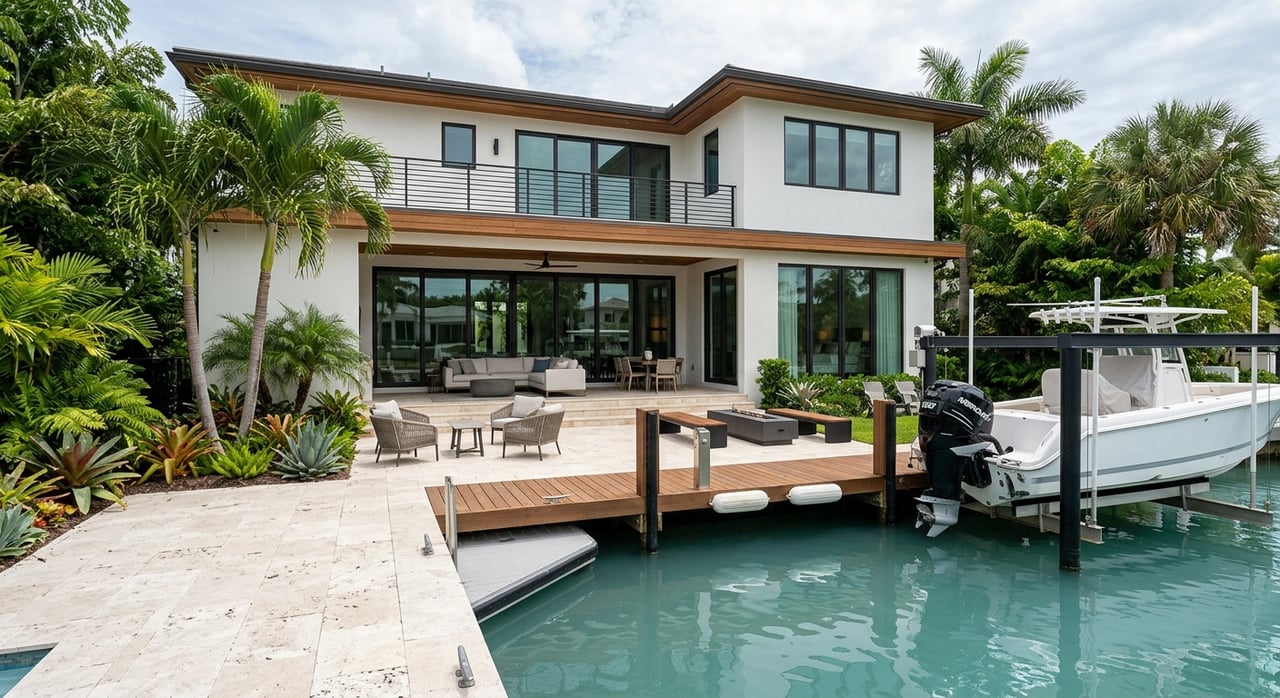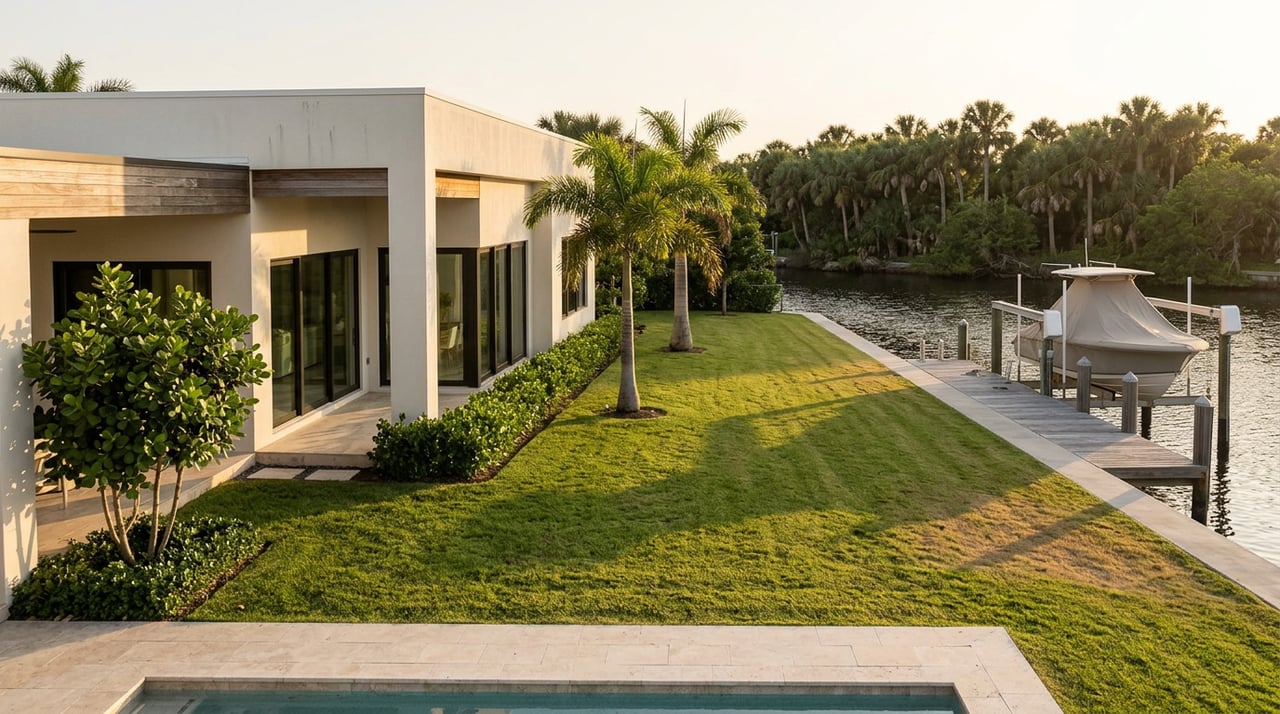
As Hometown News reported, a resident told town commissioners last September that "about one o'clock is high tide, and down at the bottom of Oakwood, the water starts backflowing up the drains." The resident added, "It just means we live with a moat on two sides of our property."
South Sewall's Point is in the middle of a major infrastructure project: a phased, unfinished conversion from septic tanks to municipal sewer. If you are shopping for a home on the peninsula, the median price on a portal does not tell you which phase or sewer system serves a particular address. That distinction can affect connection costs and the timing of any required hookup.
Two Sewall's Points, One Very Different Set of Rules
North Sewall's Point already has sewer infrastructure. South Sewall's Point is still converting to sewer, and that distinction is the whole story here. A Hometown News report put the number of South Sewall's Point homes on individual septic systems at roughly 706. The town is surrounded almost entirely by the Indian River Lagoon and the St. Lucie River. Old drainfields intermixing with tidal water is not a hypothetical for this stretch of town. It is a documented health department concern that has been driving the conversion for years.
A WQCS report said the town accepted an $8.4 million Florida Department of Environmental Protection grant in 2022. The conversion has proceeded through phases, funding fights, and elevation-dependent design choices, and where your target home falls in that sequence changes both your cost and your timeline.
Not Every Street Got the Same System
The cheapest option is a grinder pump station, a small unit installed near the home's cleanout that pumps waste to the county system. Martin County Utilities originally capped grinder eligibility at 340 of the 706 parcels, with the rest slated for gravity or vacuum systems that Town Engineer Joe Capra told commissioners could push construction costs past $8,000 to $12,000 per connection, compared with roughly $7,000 for a grinder hookup.
Phase 1, covering 169 connections, finished in January 2025. Phase 2, another 171 connections, was scheduled to wrap by February 2026. That date has already come and gone as of this writing, so if you're touring a home in that corridor, ask directly whether construction actually closed out on schedule or is still open.
The geography inside that grinder allocation is specific enough to matter street by street. The initial grinder layout ran lines from Pineapple Lane to Oakwood Drive and from Sewall's Meadow to Delano Lane, areas Capra flagged as having the longest-standing drainage and health department concerns. It also ran through the higher ground of the Rio Vista subdivision and High Point, which drew pushback in December 2025 from a commissioner who argued the design had skipped the streets that actually flood worst during king tides, specifically Riverview and Palm Roads. The Martin County Board approved an additional 134 grinder connections that month over the objections of two commissioners, expanding coverage, but the vote also exposed how much of this project has been decided meeting by meeting rather than mapped out in advance.
The practical takeaway: knowing that a home is "in South Sewall's Point" tells you almost nothing. Knowing that it's on Riverview versus Rio Vista, or Oakwood versus a street outside the original 340-parcel allocation, tells you a great deal.
The Money Was Never Guaranteed to Last
The remaining funding for this project came with a deadline. Capra told the town in late 2025 that the American Rescue Plan Act dollars covering the gravity and vacuum work had to be spent by June 30, 2026, or the roughly $5.1 million left on the table would have to be returned to the state. WQCS reported that he said, "That's a very ambitious schedule to get more work done."
That deadline has now passed. Public reporting available at the time of this writing does not yet show whether the town met it or had to hand funds back, which means it's a live, answerable question worth putting directly to the seller's agent, the town engineer's office, or Martin County Utilities before you write an offer on anything still connected to a septic tank.
The 365-Day Letter That Comes With the Property, Not the Owner
Florida law does not treat this as optional once sewer becomes available. Under Florida Statute 381.00655, a utility must give a property owner at least one year of advance notice before service arrives, then send a formal availability notice once the system is actually ready. From the date of that notice, the owner has 365 days to connect. If the existing septic system needs repair to keep functioning, that window shrinks to 90 days, with only one possible 90-day extension.
The statute attaches the obligation to the property, not to whoever happened to own it when the letter arrived. That matters enormously if you are buying into South Sewall's Point mid-conversion. A seller who received an availability notice eight months ago and did nothing hands you the remaining clock at closing. The Florida Attorney General says hardship cases can spread connection fees over monthly installments for up to five years, but there is no cushion for not knowing the clock started at all.
There's a second layer worth watching. Town Manager Robert Daniel floated a compromise last fall for future funding rounds: make new mandatory connections trigger only at the point of property transfer, so current owners keep their exemption from forced hookups but a buyer inherits the obligation the moment the deed changes hands. That idea was a proposal, not adopted policy, as of the most recent reporting available. If it moves forward, it would mean the act of closing on a South Sewall's Point home could itself be the event that starts a bill the seller never had to pay.
Construction on this project has also had its share of on-the-ground friction. In April 2026, contractors working on part of the septic-to-sewer line were cited for unauthorized dewatering that sent unfiltered groundwater into the Indian River Lagoon, drawing warnings from the Department of Environmental Protection and the South Florida Water Management District. If you're viewing a home while work is active nearby, ask whether construction has affected the yard, the seawall, or the water quality directly off the dock.
Questions Worth Asking Before You Write an Offer
- Has this specific parcel received a written sewer availability notice, and if so, on what date? That date starts the 365-day clock.
- Is the home already connected to a grinder system, or is it still on septic pending a future phase?
- Which funding round or grinder allocation covers this street: the original 340-parcel group, the December 2025 expansion, or the unfunded remainder?
- Who is contractually responsible for the connection fee at closing, and is that documented in the seller's disclosure?
- If the septic system is aging, has it required any repair that could trigger the shorter 90-day connection window instead of the standard 365 days?
A Short FAQ
Does this affect homes in North Sewall's Point too? No. North Sewall's Point already has sewer infrastructure. This entire conversion story is specific to the roughly 706 parcels in South Sewall's Point.
What happens if my septic system fails before sewer reaches my street? Florida law treats system failure differently from routine phase-in. Once a sewer connection is available and your onsite system needs repair to function properly, you have 90 days to connect rather than 365, with at most one 90-day extension.
Did the town meet its June 2026 grant deadline? That answer wasn't settled in the reporting we found at the time of writing. It's a direct, answerable question to put to the town engineer's office or Martin County Utilities before assuming any remaining parcels will get the cheaper grinder option.
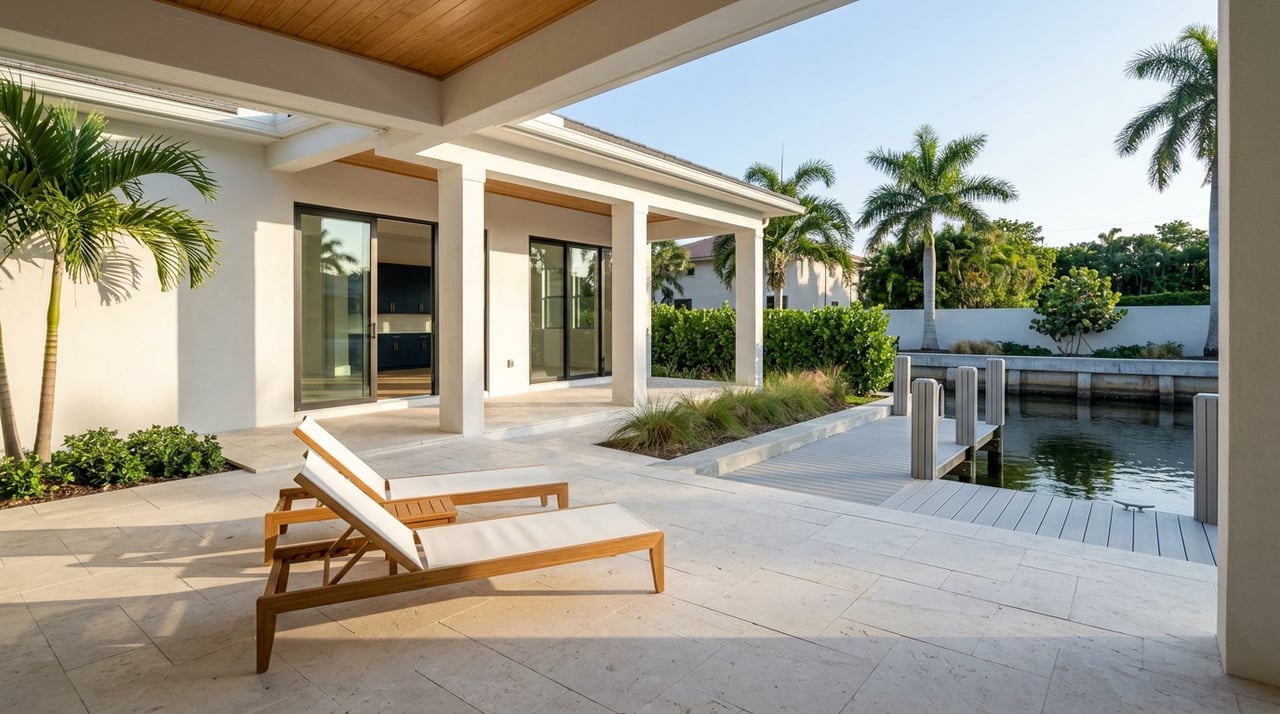
A home on the water in Sewall's Point still makes as strong a case as any for living on the Treasure Coast, moat or no moat. Its sewer infrastructure is in transition, with different phases, funding, and state-law requirements applying across the peninsula. Before making an offer, confirm which phase, street, and funding vote apply to the address, and whether a sewer availability notice has been issued.
If you're weighing a purchase in South Sewall's Point and want someone who tracks these town meetings as closely as the tide charts, The Quinn Group can talk to a local waterfront expert with you before you write an offer, not after.
This article is general information, not legal, tax or financial advice. Consult a qualified professional about your situation.