Before the first surfcaster reaches the beach, an ATV has already been there. Ecological Associates crews start their loops at first light, marking crawls, staking nests, and logging the previous night's activity into a dataset that stretches back decades. By the time you carry your coffee out to the seawall, the count for the day is already in.
That is the part of summer on Hutchinson Island most guides skip. The season here is not defined by heat or hurricane forecasts. It is defined by a shared work calendar with three species of endangered turtle, and once you have lived through a few of them, you stop planning your July around the beach and start planning it around the nests.
The Yellow Stakes Are Not Decoration
If you have walked the beach south of Stuart Beach in the last month, you have seen them: four small stakes and a strand of surveyor's tape, sometimes with a plywood screen on the seaward side. Each one is a working file. During 2026, Ecological Associates is documenting sea turtle nesting and reproductive success on North Hutchinson Island in Indian River County, using daily early morning surveys on all-terrain vehicles to record nesting activity, mark and monitor nests, and excavate marked nests. The same crews cover stretches of our island to the south.
The staking is not a warning to keep back for aesthetic reasons. It is the outer boundary of a data collection zone. The green turtle, the leatherback, and the loggerhead all nest in this area, and 90 percent of the world's loggerhead reproduction occurs in Florida. The Treasure Coast beach in front of your building is not one of many nesting sites. On the loggerhead map, it is close to the center of the map.
The number that reframes the whole thing: one out of every 10,000 loggerheads makes it to adulthood. Every hole a beachgoer forgets to fill in, every unshielded porch light, every abandoned chair after sunset is a tax on that already brutal fraction. The stakes are the visible piece of an accounting exercise that runs the length of the island.
Friday Mornings, South of Jensen Public Beach
The single most local thing you can do in July or August is show up for a nest inventory. In partnership with Florida Oceanographic Society, EAI offers public nest excavation programs in Jensen Beach on select Friday mornings throughout July and August, taking place just south of Jensen Public Beach on the beachside of Hutchinson Shores Resort & Spa.
Here is what actually happens. A biologist walks a group out to a nest that hatched a few nights earlier. The nest has been left alone on purpose. The rule is to wait at least three days after hatching before excavating, because that 72 hours allows the hatchlings to make their own way to the water. Only then does the team open the chamber, count spent shells, count unhatched eggs, and calculate a survival rate for that specific clutch.
Following the presentation, biologists inventory the contents of a nest that hatched naturally prior to the event and, if conditions allow before 9 a.m., release any hatchlings still found in the egg chamber under FWC guidelines.
All ages are welcome, no registration is required, and programs are announced three days prior to the event. That short notice is the reason locals catch these and visitors rarely do. If you follow EAI's Facebook page in-season, the Friday alert usually goes out on a Tuesday. Put a standing note on your calendar for July and August Fridays before 9 a.m. and let the alert fill it in.
The Rule Your Porch Lights Answer To
Every long-term resident here learns three words: dark, flat, clean. It is the framework EAI and the Florida Oceanographic Society use to discuss threats to sea turtles in every public program they run, and it is how the county writes its beachfront lighting expectations.
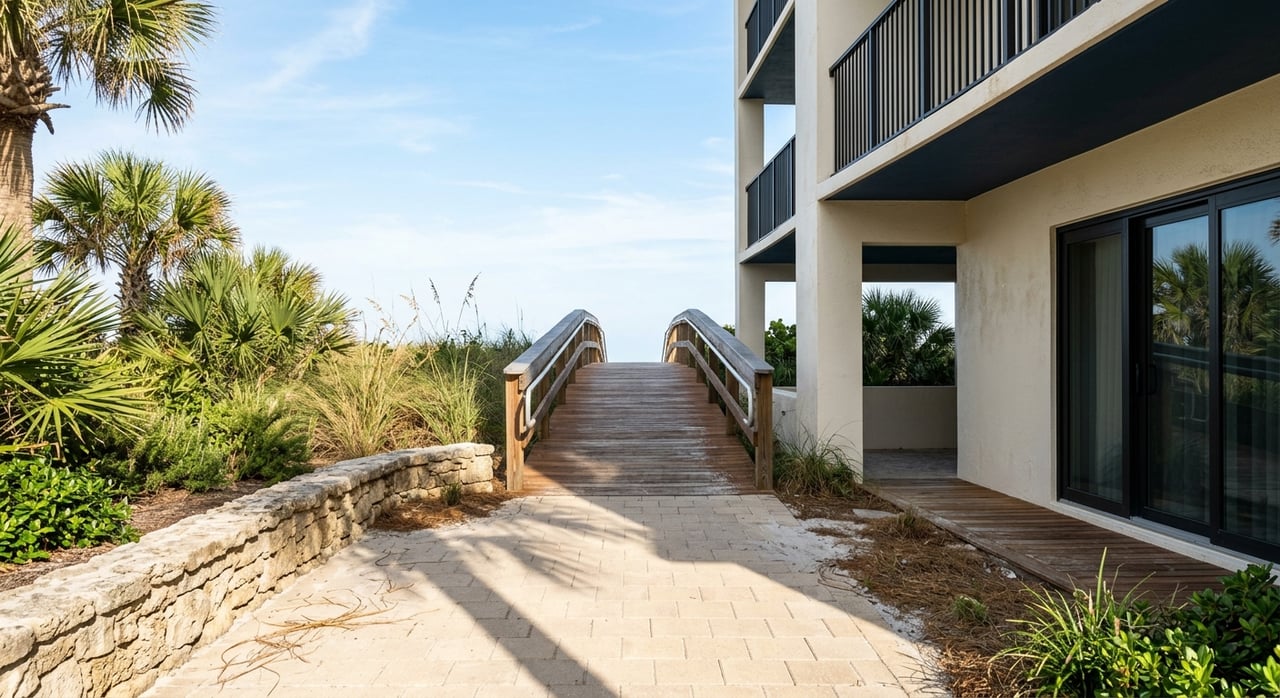
For a homeowner or condo owner within sight of the dune line, the practical translation looks like this:
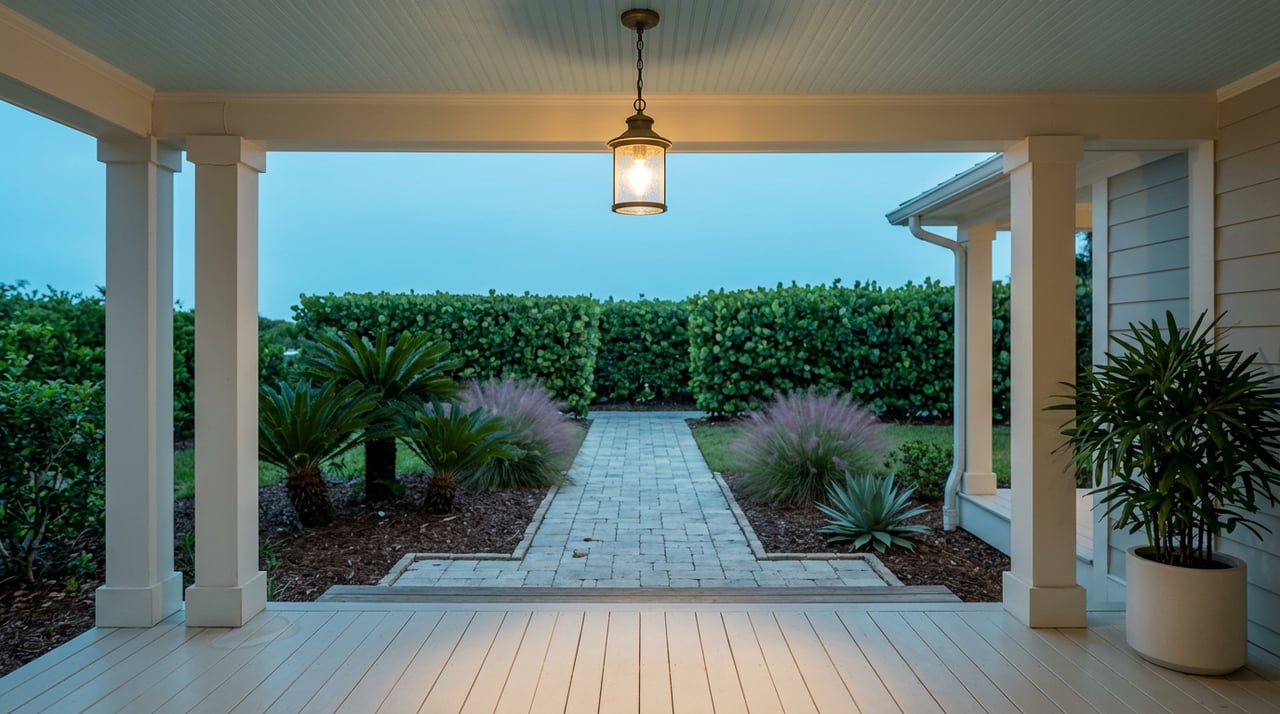
- Dark. Any exterior fixture visible from the beach should be shielded, low-mounted, and using amber or red LED bulbs during nesting season. A single bright bulb on a fourth-floor balcony can pull a hatchling inland toward A1A instead of toward the surf.
- Flat. Sand castles are charming at 4 p.m. and lethal at 4 a.m. A nesting female that drops into a two-foot pit will exhaust herself trying to climb out. Knock everything down before you leave.
- Clean. Chairs, umbrellas, coolers, and cabanas left overnight are obstacles a 300-pound loggerhead has to detour around, if she can at all. If she cannot, she false-crawls back to the water without laying.
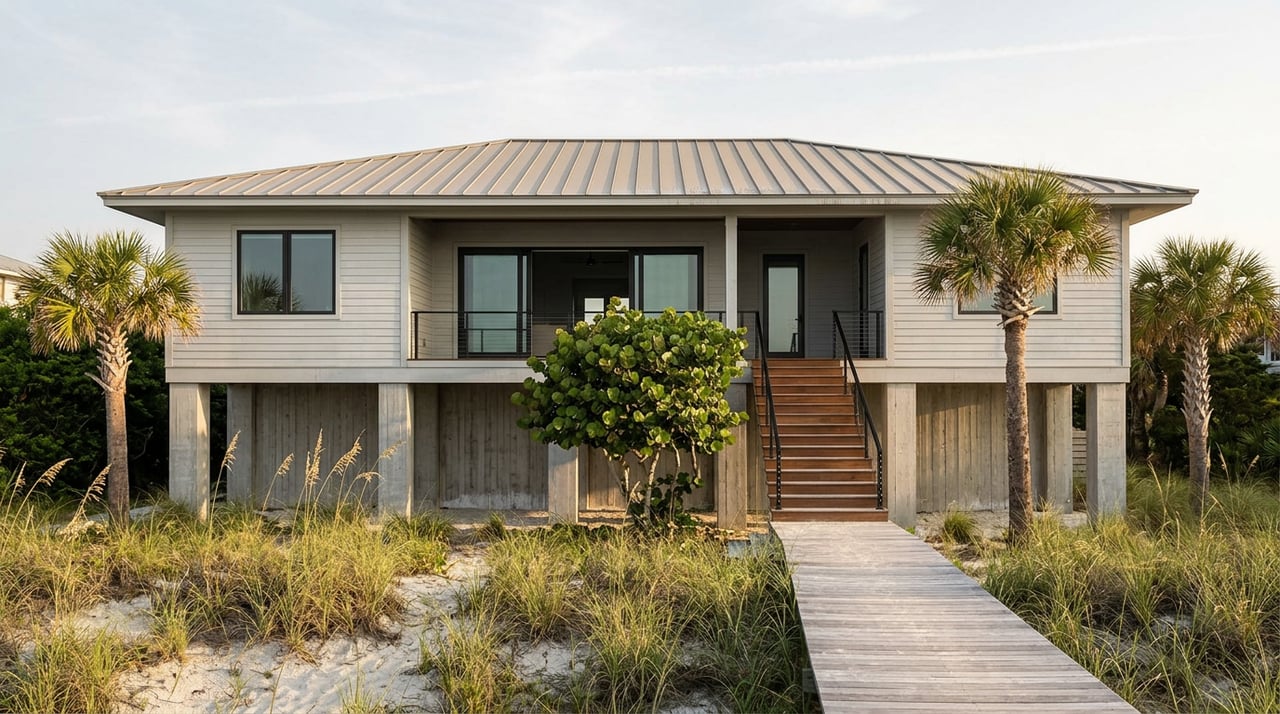
The reason this matters at the household level is that the official sea turtle nesting season in Florida runs from March 1 to October 31. That is eight months a year during which your porch, your dune walkover, and your beach chair storage habits are part of the survey. Not a season to squeeze around. The season.
What $20 Actually Buys You Right Now
There is a real choice for residents who want to go deeper this summer, and the two options are priced identically for a reason. One is nocturnal, one is diurnal, and they teach very different things.
| Program | When | Cost | What you actually see |
|---|---|---|---|
| Nighttime Turtle Walk (EAI) | Summer evenings, by reservation | $20 per person plus Eventbrite processing fee | A live loggerhead in the act of laying eggs, located by a scout ahead of the group |
| Florida Oceanographic Coastal Center | Daily, 10 a.m. to 4 p.m. | $20 general admission, $10 for children 3 to 12, free for members and children under 2, $18 for active and retired military | Stingray, gamefish, and sea turtle programs on a set daily schedule, plus the nature trail |
The Nighttime Turtle Walk lets the public observe a nesting turtle under the guidance of permitted biologists, includes a presentation on sea turtle biology and the nesting process, and only proceeds once a scout locates a loggerhead in the correct stage of laying. There is no guarantee. That is the point. The program is a real field observation, not a scheduled show.
The Coastal Center is the daytime counterpart, and it has changed in a way locals should know about. Florida Oceanographic Society recently received renewed authorization from Florida Fish and Wildlife Conservation to provide lifelong care for non-releasable sea turtles at the Coastal Center. If you have not been back since the turtles returned, the exhibit is not the exhibit you remember. It is worth an afternoon.
The daily schedule is fixed enough to plan a morning around: the Stingray Program runs at 10:30 a.m. and 1:30 p.m., the Gamefish Program at 11:00 a.m. and 2:00 p.m., the Sea Turtle Program at 11:30 a.m. and 2:30 p.m., and the nature trail is open from 10:00 a.m. to 3:45 p.m., with a Mangrove and Seagrass Walk every Sunday and Friday from 11 a.m. to noon.
Where the Season Bends Your Dinner Plans
Sea turtle season quietly rewrites the local dinner calendar too. On a Friday when you have been out at 6:30 a.m. for an excavation, a long lunch beats a late dinner, and the seaward-facing restaurants shift their outdoor lighting to comply with the same rules your porch does.
A few anchors that fit the rhythm:
- Baha Grille and Latitudes Tiki Bar at 555 NE Ocean Blvd, inside the Marriott Hutchinson Island Beach Resort, are the closest full-service option to Stuart Beach. Latitudes is the onsite tiki bar and Baha Grille is the breakfast buffet room, and the resort has added new outlets branded Hutch and Local Lanes.
- The House of Refuge Museum and Bathtub Beach sit at the southern tip of the island, close enough to fold into a morning walk before the sun turns punishing. Stuart's southern tip of Hutchinson Island holds the House of Refuge Museum and Bathtub Beach, and the Elliott Museum sits nearby.
- The Elliott Museum is the rainy-afternoon backstop, and it pairs naturally with the Coastal Center for a full-day loop that keeps you off the beach during the hottest and most turtle-sensitive hours.
None of this is a tourist itinerary. It is what the summer week looks like when your beach access is real, your lighting is compliant, and your Friday mornings belong to a nest inventory instead of a brunch reservation.
Talk to a Local Waterfront Expert
Living on Hutchinson Island in the summer is a set of small, specific habits that only make sense once you have run a season here. If you own on the island or you are thinking about the kind of ownership that comes with a dune walkover and a lighting ordinance, the team at The Quinn Group knows this beach, this season, and this rulebook from the inside. Reach out when you want a conversation about waterfront ownership grounded in how the island actually lives from March through October.