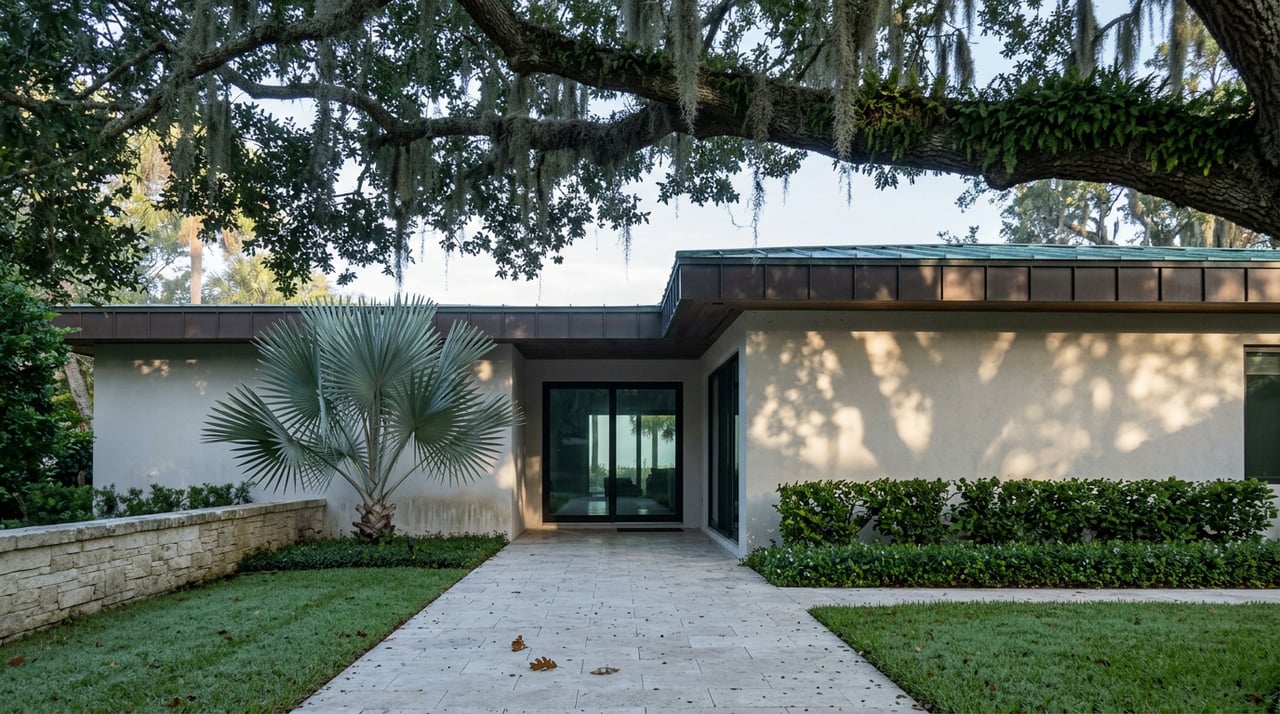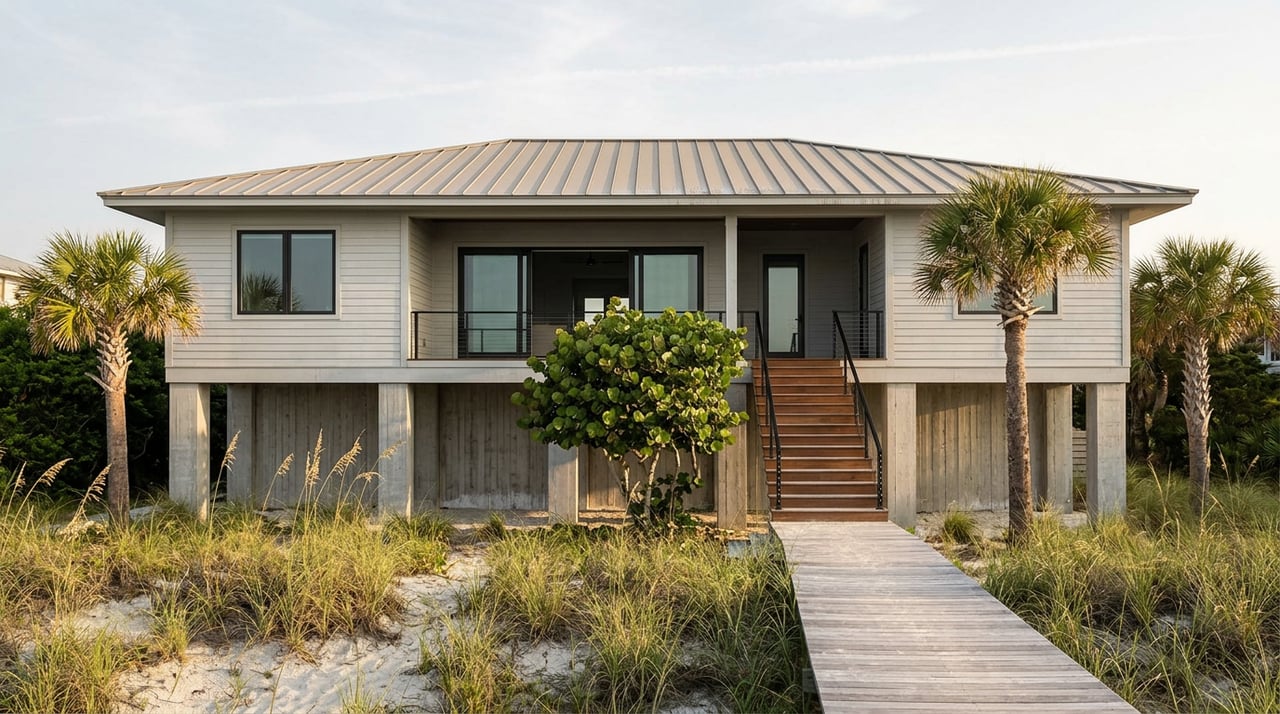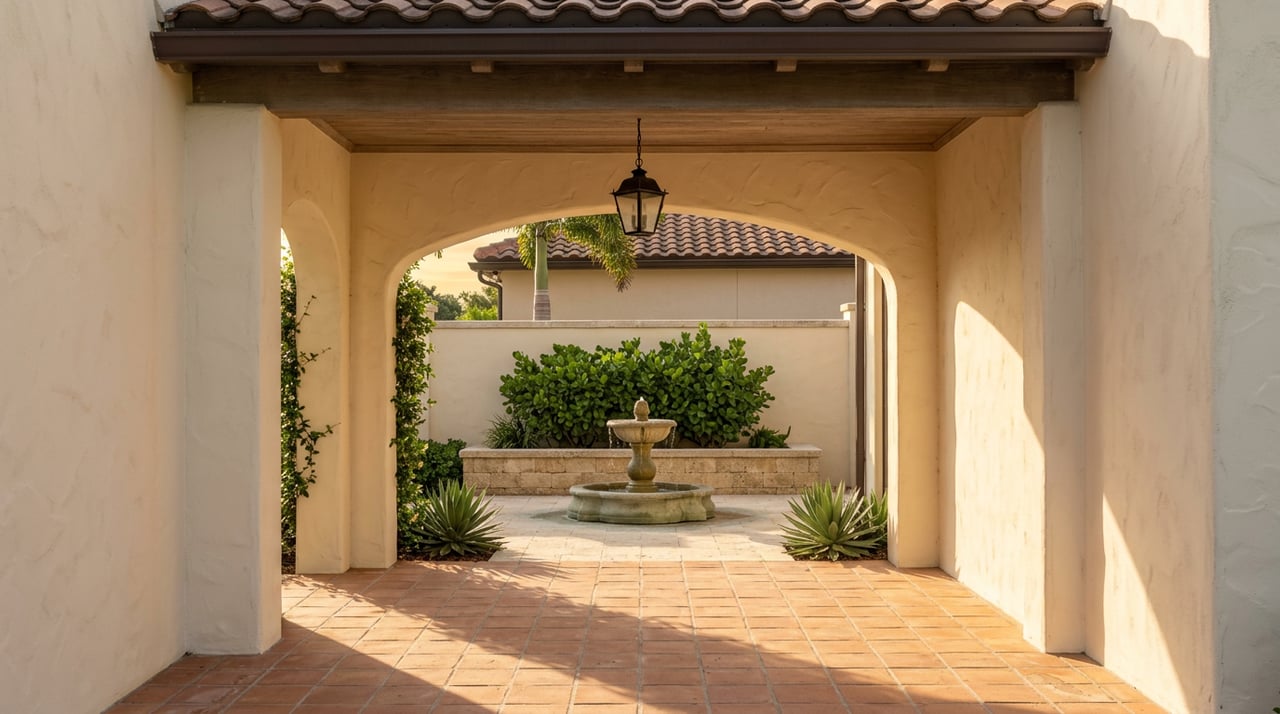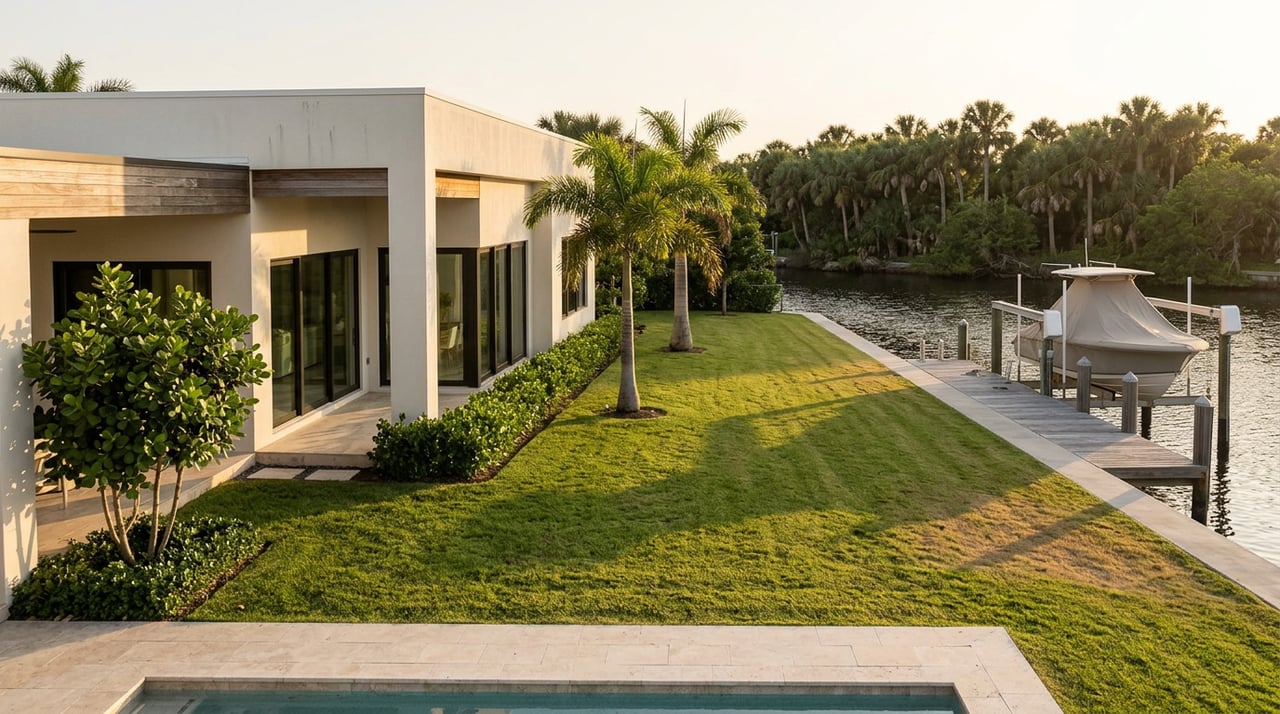
Two five-acre parcels sit inside the same gated pocket of Palm City Farms. Same zoning, same paved road, same underground electric run to the property line. A buyer pulls up both listings, divides price by acreage, and assumes the cheaper one is simply a better deal. It might be the opposite. In Palm City Farms, the number on the listing sheet is the least useful figure on the page. What actually prices the parcel is what sits underneath the acre count: whether the ground drains, whether the road reaching it belongs to anyone, and whether a well and septic field can legally go where the buyer's site plan wants them.
Divide price by acreage here and you've solved the wrong problem.
The Zoning Cap That Sets the Floor
Palm City Farms was platted in the early 1900s and recorded in Plat Book 6, Page 42 of the public records, back when the land still fell under Palm Beach County before Martin County split off. Martin County's current land development code still names that original plat directly. The Agricultural Ranchette district built around it caps density at one dwelling unit per five gross acres across most of the platted area, with some individual parcels carrying a different residential estate designation instead. The specific designation on file matters more than the general reputation of the neighborhood.
That cap isn't a marketing line a broker repeats to sound rustic. It is a comprehensive plan designation from the county's Future Land Use Map, and it's why Palm City Farms stayed acreage while subdivisions filled in the land around it on both sides of I-95 and the Turnpike. A buyer can't petition a commission for a variance to split a five-acre lot into two 2.5-acre lots just because the market wants smaller, cheaper entry points. The density is fixed by policy, not demand.
That fixed supply is the reason values here hold even when the county's broader market loosens. It's also why the acreage number matters less than what's inside it. You can't create more homesites in Palm City Farms. You can only find out which five acres are the good five acres.
What $115,000 an Acre Actually Buys
A recent example makes the point concrete. A 5.02-acre cleared corner lot in the Fox Grove section of the gated Meadow Run community listed at $580,000, or roughly $115,500 an acre. That's a real number, not an average, and it sits between two very different categories of land in the same submarket.
Current land-listing data for farmland near Palm City shows a dozen larger properties averaging around $82,000 an acre, tracts that tend to run bigger, ten acres and up, often raw and uncleared with minimal road frontage. A separate set of smaller, already-improved hobby-farm listings in the same area runs closer to $216,000 an acre, properties that typically already carry a house, fencing, sometimes a barn.
The Fox Grove lot lands in between because it's raw land, like the bulk tracts, but it comes bundled with things bulk acreage doesn't: a paved road inside a gated entry and underground electric already stubbed to the property line. A buyer isn't just paying for dirt. They're paying to skip the part where you fight the county over a driveway permit and wait for the utility company to run a line half a mile down an unpaved right of way.
| Land tier | What it typically looks like | Approx. price per acre |
|---|---|---|
| Bulk acreage near Palm City | Larger, often raw or uncleared tracts, minimal road frontage | around $82,000 |
| Fox Grove / Meadow Run build-ready lot | Cleared, gated community, paved road, underground electric to the site | around $115,500 |
| Small, already-improved hobby farms | House and fencing already in place, sometimes a barn | around $216,000 |
Same word, "acre," on three very different products. That's the whole point.
The Road You're Actually Buying Access Through
Palm City Farms runs on a network of century-old platted rights of way, laid out on paper decades before most of them were ever graded. Martin County only takes over maintenance on one of these roads once it's been formally accepted into the county system, typically after years of consistent upkeep or actual county construction. Until that happens, the road is still legally there, a buyer still has legal access across it, but grading, drainage, and pothole repair fall to the property owners whose land the right of way touches.
That means a five-acre parcel can have perfectly clean title and legal access and still sit at the end of a road nobody but the neighbors is responsible for maintaining after a wet summer.
The Palm City Farms Trail Association, a nonprofit established in 2003, exists partly because of this gap. Its stated mission is identifying, clearing, and maintaining the historic trail and right-of-way system across the area, and it's a genuine resource for a buyer trying to figure out the real condition and status of the road serving a specific parcel before closing, not just the road's condition on the day of the showing.
A road nobody owns is still a road somebody has to fix.
Dry Acres, Wet Acres
Acreage on a plat map isn't the same as acreage you can build on. A listing might say ten acres, but once a wetland delineation and any required setbacks are subtracted, the buildable footprint could be closer to four or five. That gap doesn't show up in the headline number, and it's exactly the kind of detail that turns into a negotiation point during due diligence rather than a surprise at closing, if the buyer knows to ask for it up front.
The same is true for what's under the ground rather than on top of it. Palm City Farms sits outside the county's water and sewer service area, so private wells and septic systems are the norm, not the exception. Their age, capacity, and condition are a real, sometimes five-figure cost that a buyer inherits along with the acreage, and they deserve the same inspection attention as the house itself.
Before comparing any two listings by price alone, it's worth working through a short list:
- Ask for a wetland delineation, or at minimum a description that separates dry, buildable acreage from any wetland or preserve area on the parcel.
- Confirm legal access directly: is the road formally accepted by the county, or a platted right of way maintained privately by abutting owners?
- Have the well tested and the septic system inspected as its own line item, separate from a standard home inspection.
- Pull the FEMA flood zone and elevation for the exact parcel, since low ground near canals can rate very differently from a dry lot half a mile away.
- Confirm the actual zoning designation on file for the specific parcel rather than assuming the neighborhood-wide five-acre rule applies to every lot.
What This Means If You're Comparing Listings This Month
MLS-sourced data through late June 2026 put typical time to sell in Palm City Farms at around two months, with asking prices running above recent per-square-foot sales, a sign that supply stays tight enough for sellers to hold leverage on well-positioned parcels. That leverage runs out fast for anything overpriced relative to what the land actually offers, which is exactly why the diligence above matters more here than in a standard subdivision. A buyer who has already sorted out drainage, access, and utility status on a specific parcel is the one who can move with confidence the moment the right five acres, and not just any five acres, comes on the market.
A Few Direct Questions
Does every Palm City Farms property run on well and septic? Functionally, yes. The area sits outside the county's water and sewer service area, so private well and septic systems are standard, and their age and capacity belong in any offer's due diligence period.
Is Meadow Run the same thing as Palm City Farms? Meadow Run, referenced with the Fox Grove section in current listings, is a gated equestrian enclave of roughly 90 five-plus-acre homesites built within the larger Palm City Farms area. It carries paved roads and underground electric that older sections of Palm City Farms were never platted with.
Can a five-acre Palm City Farms lot be split into two smaller lots later? Not on a parcel zoned Agricultural Ranchette, which caps density at one home per five gross acres. A small number of parcels in the area carry a different residential estate designation, so anyone considering a future split should confirm the specific zoning on file for that parcel before assuming either way.
A five-acre number on a listing sheet is a starting point, not an answer. The real comparison happens on the ground, in what's dry, what's legally reachable, and what the well and septic have left in them. If you're weighing acreage in Palm City Farms and want someone who reads the parcel before the price, talk to a local waterfront expert at The Quinn Group at My Florida Insider, where rural deeds get the same attention as dock permits.